
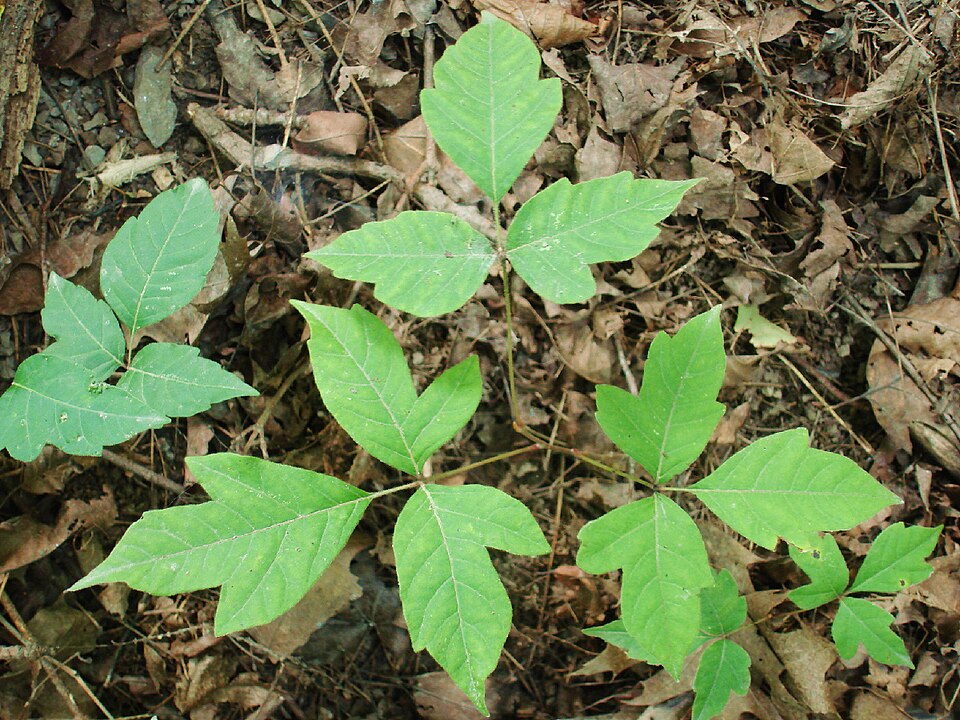
It’s that time of year again, and as everyone spends more time outdoors our office will start to see more cases of contact dermatitis from plants. Being able to identify poison ivy is an important skill that every person venturing into the outdoors should know. Poison ivy is found in every county of Arkansas, and is ready spread by birds. This means you’ll not only find it in the woods, but it can also grow within urban green areas, like parks and flower beds.
Poison ivy grows as a vine and can climb. It has yellow-green leaves that grow with three leaflets. You may know the phrase “leaves of three, let it be”. Leaflets are usually 3 to 5 inches long. In the fall, the leaves turn shades of orange or red and may produce clusters of small white berries on old vines.

Poison oak is similar to poison ivy except it does not climb. Instead it forms small bushes about 2 to 3 feet tall. The leaves still produce with three leaflets, so the old adage applies.
About half of the population is allergic to the toxins found in poison ivy. The oil on the leaves causing the allergic reaction is called “urushiol”. These oils are released when the foliage is brushed and the epidermis broken, causing dermatitis. Contact with the roots or even smoke from logs containing poison ivy vines can also cause dermatitis.
Symptoms of contact dermatitis caused by poison ivy usually include raised, red, itching rashes, and usually appear 24 to 48 hours after exposure. Thorough washing with soap and water will often prevent symptom from developing. If you are suffering from a poison ivy rash, come and let Regional Family Medicine take care of you!
(Sources: University of Arkansas Division of Agriculture, Photo: Wiki Commons)