
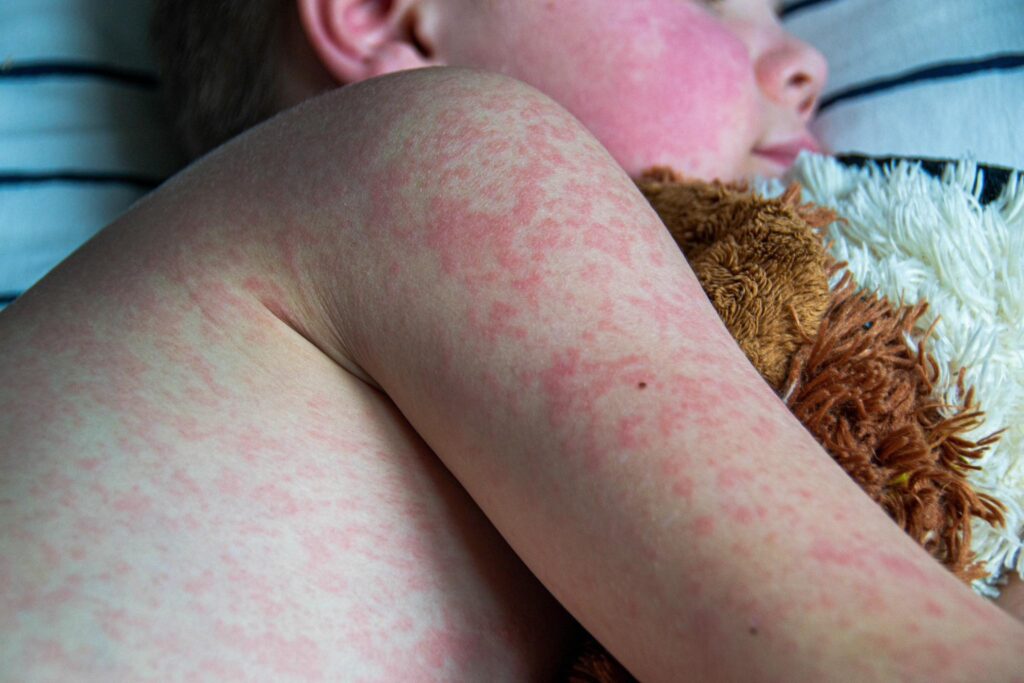
Measles, also known as rubeola, is highly contagious and spread through the air. You can contract measles virus just by being in a room 2 hours after someone with measles had been there.
Symptoms
Measles symptoms typically appear 7-14 days after catching the virus and can consist of high fevers, cough, runny nose, red and watery eyes and a rash. Measles can cause serious health problems, especially in children younger than 5. It can also lead to blindness. Measles can cause pneumonia and encephalitis (a brain infection) which can be fatal.
Treatment
Measles is mostly treated by treating symptoms and it is recommended to give 2 doses of a vitamin A supplement. Vitamin A has no role in prevention however and can be toxic if not dosed correctly.
Measles at one time had been eradicated from the United States, but that was short lived because unvaccinated travelers continually bring it back into the country. Now that we have a growing population of people choosing to not vaccinate, the virus has more opportunity to spread.
There are over 100,000 deaths globally from measles easy year, which is a marked improvement from the 2.6 million annual deaths reported globally before 1963 when vaccinations became available. Most measles deaths are in small children.
Prevention
The best way to prevent measles is to get 2 MMR vaccinations – this is 97% effective at prevention. If enough people in the population are 97% protected, the protection of the group as a whole increases due to the lower likelihood of any one person bringing the virus into the community. This is called Herd Immunity and it is an important factor in protecting all of us, particularly those who cannot receive the vaccine (babies who are too young, for example). It is recommended to receive the MMR at age 12 months and again at 4-6 years of age.