

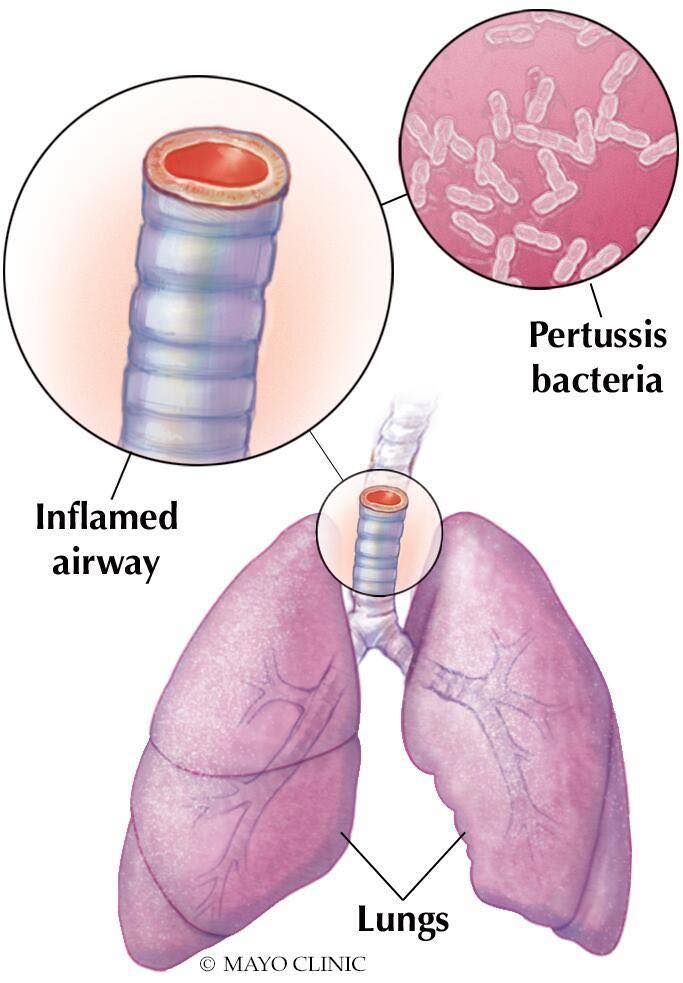
Pertussis, also known as whooping cough, is a very contagious respiratory illness caused by the bacteria, Bordetella pertussis. This bacteria attaches to the lining of the upper respiratory system and releases toxins that damage the airway and cause it to swell. Whooping cough can last for months, but thankfully it can be treated with antibiotics, making the infection less serious.
Pertussis symptoms usually develop within 5 to 10 days after exposure, but sometimes not for as long as 21 days.
Babies have the greatest risk for both contracting it and for having serious complications. This infection is also dangerous for those who are immunocompromised and those with asthma and/or COPD. Whooping cough is spread person to person through respiratory droplets and an infected individual can be contagious for many weeks!
Before we began vaccinating against whooping cough in the 1940’s, about 200,000 American children contracted it annually, and about 9,000 of those children died. In 2023 about 3,000 cases were reported, with only 2 deaths in the U.S.
Our best way to prevent whooping cough is with vaccinations. Pertussis is typically part of a combined vaccine with tetanus and diphtheria (DTaP).
Current recommendations are:
- DTaP at ages 2 months, 4 months and 6 months and also at 15-18 months and also at 4-6 years
- Tdap at age 11-12 years
- Tdap during pregnancy at 27-36 weeks
- Tdap for anyone who has never received it
(Sources: Our World In Data, CDC)